
Full Coverage
Full Truck Wraps
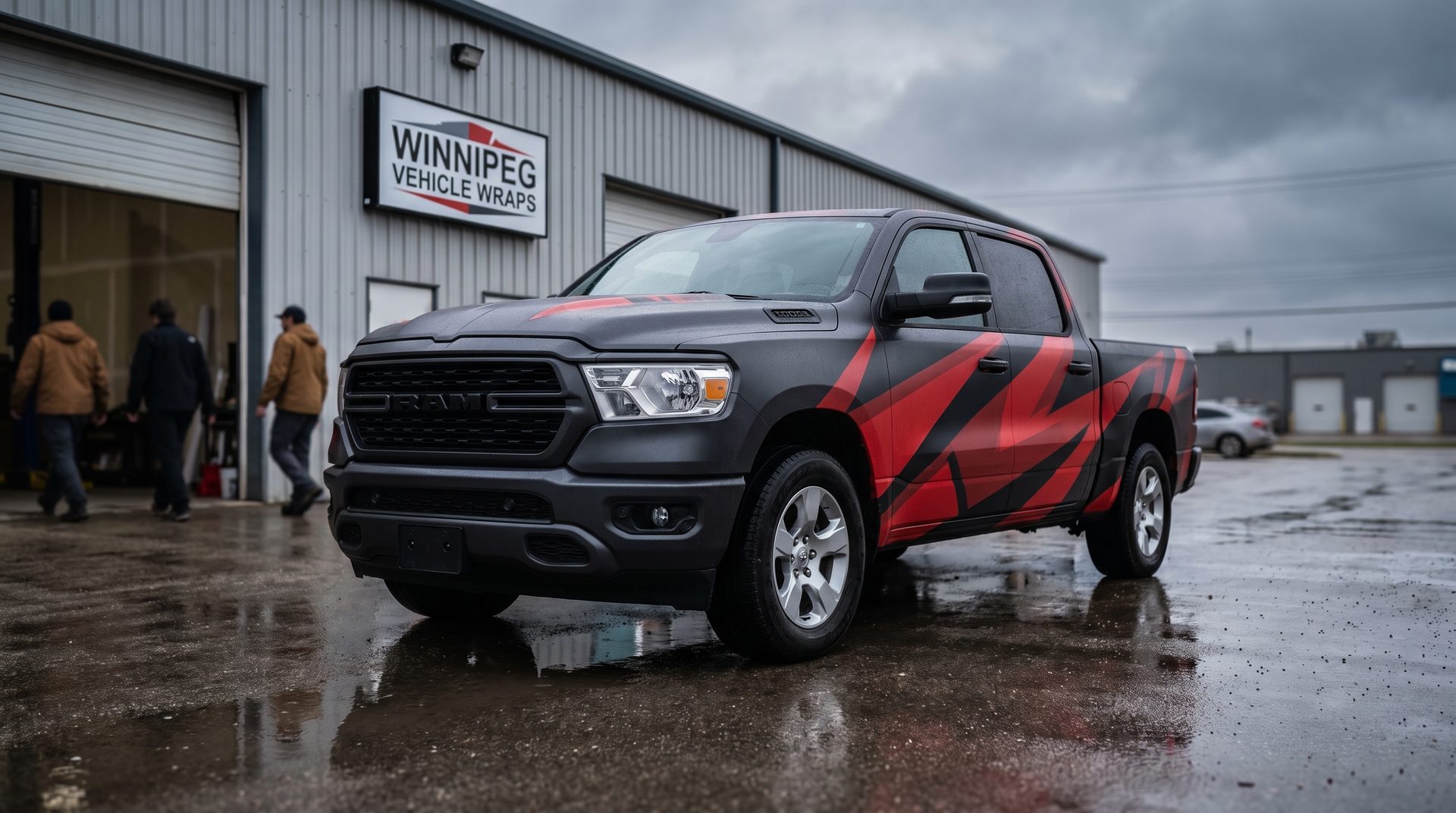
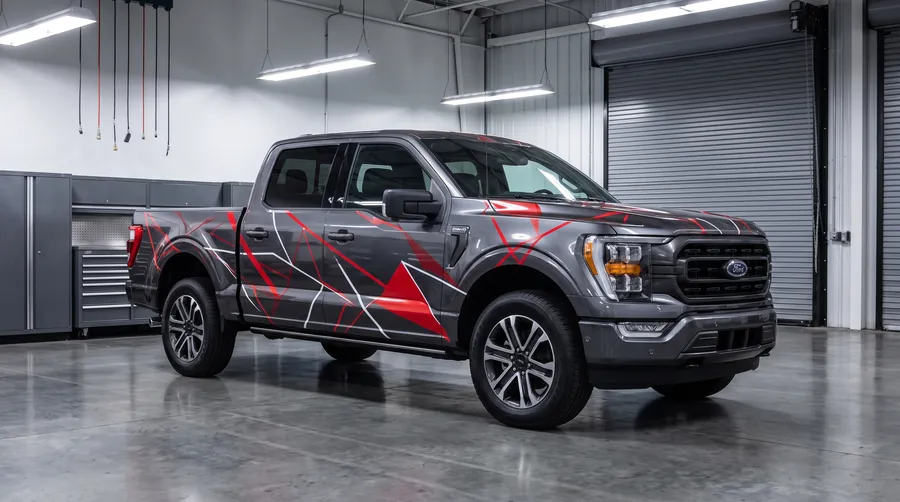
Complete coverage on pickups and service trucks — cab, box sides, tailgate and bumpers. Colour change or full graphic build, printed on cast film and laminated.
Commercial truck, cargo van, box truck and trailer wraps in Winnipeg. Cast vinyl, a heated install bay, and templates that make truck number twelve match truck number one.
Every service below is scoped for working vehicles — panel counts, rivets, roll-up doors, ladder racks and the downtime that comes with taking a truck off the road.
Complete coverage on pickups and service trucks — cab, box sides, tailgate and bumpers. Colour change or full graphic build, printed on cast film and laminated.
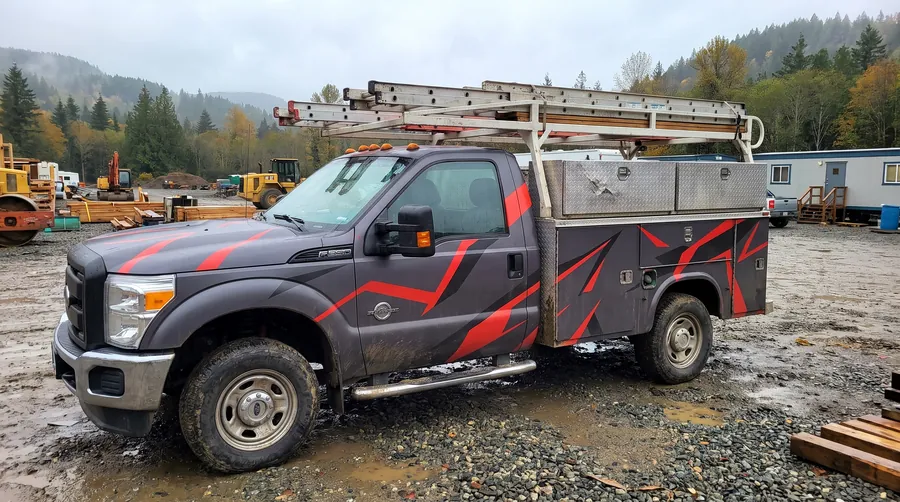
Trade and service trucks with the details that actually get read at a red light: legible phone number, clean licence line, and contact info sized for traffic distance.
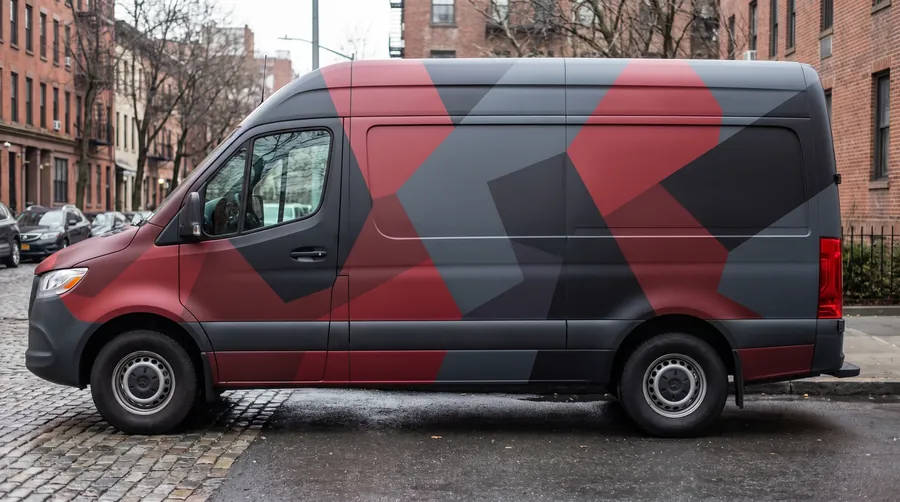
High-roof sprinters, transits and cargo vans. Big flat slabs of usable space — laid out so the message survives being parked next to a curb all day.
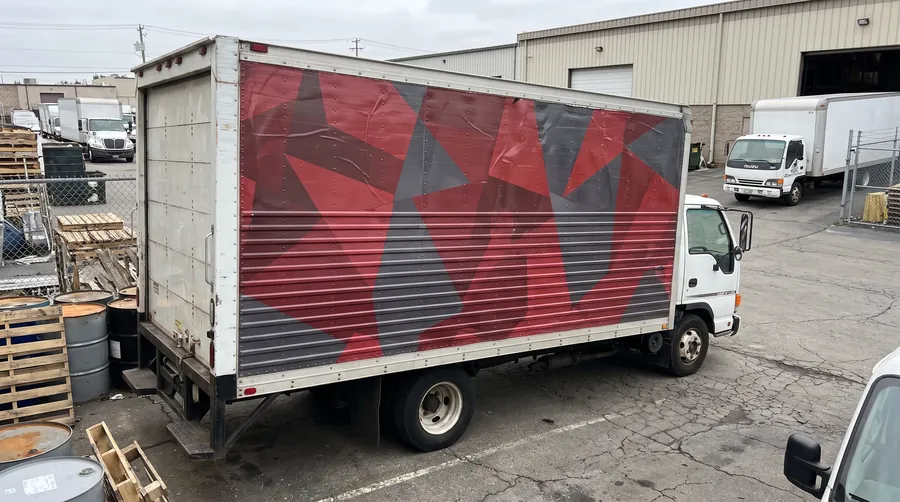
Cube vans, box trucks, enclosed trailers and dry vans. Corrugated and riveted sides get the right film and proper post-heating so edges stay down through winter.
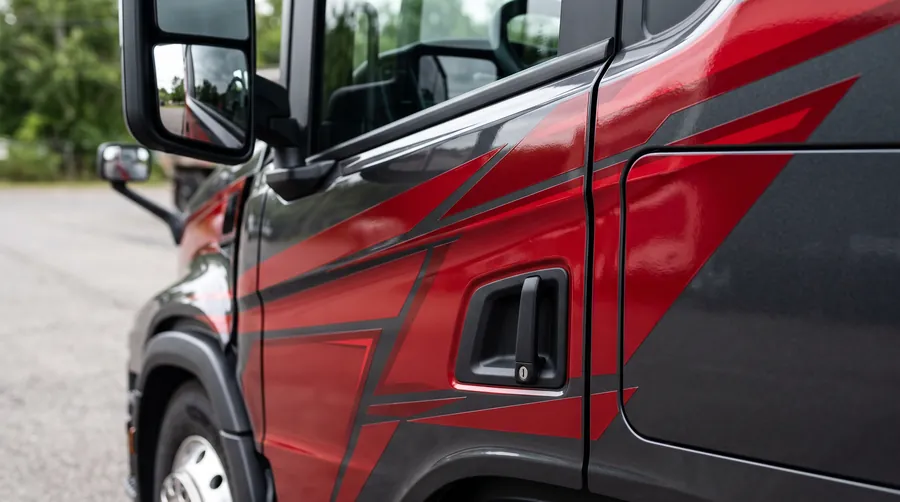
Door lettering, box-side decals, tailgate graphics and cab-side panels. Most of the roadside impact of a full wrap, at a fraction of the coverage.
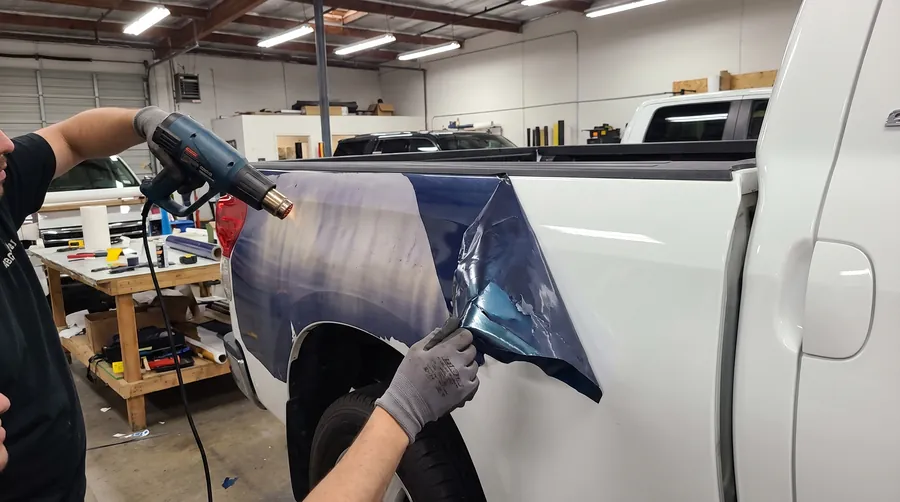
Rebranding, lease returns, or replacing sun-tired film. Controlled heat removal, adhesive cleanup, and a straight answer about what the paint underneath looks like.
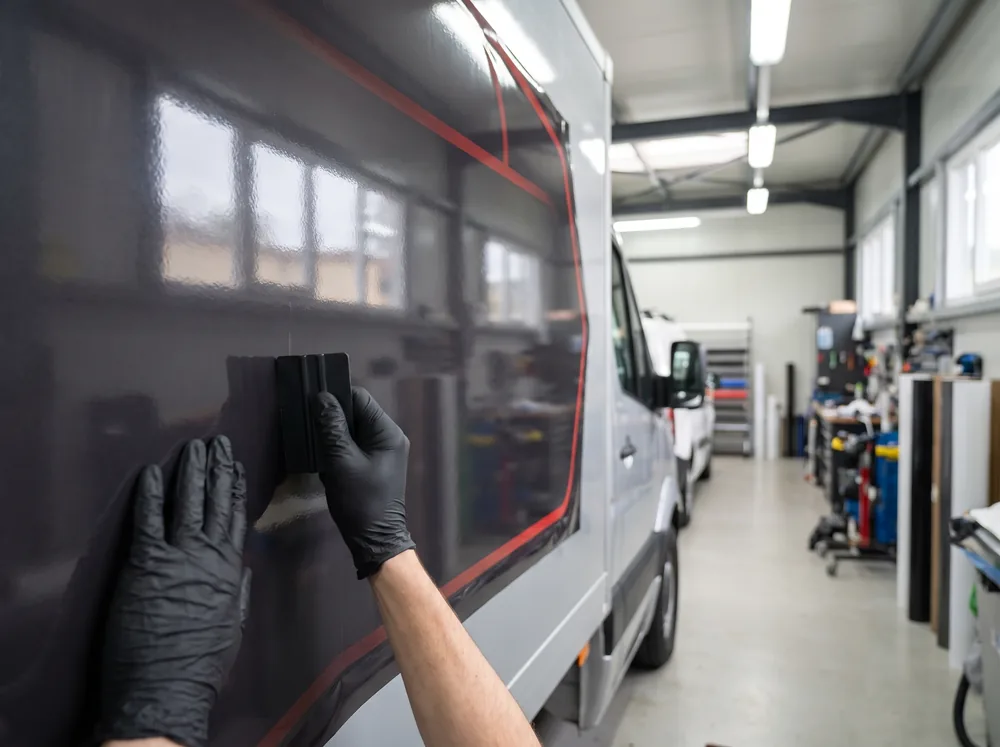
A car is smooth panels and gentle curves. A truck is rivets, corrugation, roll-up doors, toolboxes, ladder racks, seams and hardware that all want to lift vinyl at the edges. Wrapping one like the other is why wraps fail early.
You get a scheduled in-and-out window before the truck is booked. Fleet work is batched so you are never short more than a truck or two at once.
Cast vinyl on curves, rivets and corrugation — the places calendared film pulls back from first. Laminated for abrasion and UV, because these trucks live outside.
Your layout is stored per truck model. Add a unit next spring and it matches the rest of the fleet without redrawing artwork from scratch.
Six steps. You know the timeline, the coverage and the cost before anything gets printed.
Truck year, make, model and body type. We confirm panel count, coverage level and which hardware has to be worked around.
Flat proofs plus a mockup on your actual truck model, so you are approving how it reads on the road, not on a page.
Printed on cast vinyl and laminated. Colours are checked against the proof before a single panel leaves the printer.
Full decontamination wash, adhesive and wax removal, hardware pulled where needed. Install happens in a heated, dust-controlled bay.
Every seam, edge, rivet and recess post-heated to spec, then walked and checked panel by panel before the truck moves.
Keys back on the scheduled day with a care sheet covering washing, winter salt and what to do if an edge ever lifts.
Real ranges, not a "call for pricing" wall. Final numbers depend on coverage, body type, panel count and how much hardware has to come off.
Full coverage on a half-ton or three-quarter-ton, including box sides and tailgate.
Standard through high-roof extended. Roof height and wheelbase move this range the most.
Cube vans, box trucks and enclosed trailers. Priced by length, height and corrugation.
One design cycle amortised across the fleet, batched scheduling, and per-unit pricing that drops as the count goes up.
Partial wraps, door lettering and box-side decals typically run $600–$2,200 depending on coverage. Design time is quoted separately when you do not already have print-ready artwork.
A single pickup or service truck is typically 3 to 5 days in the shop once artwork is approved. Box trucks and trailers usually run 4 to 7 days depending on panel count. Fleet runs are scheduled in batches so you are never short more than one or two trucks at a time.
Most pickups and service trucks land between $3,200 and $4,800. Cargo and sprinter vans run $3,800 to $6,000. Box trucks and trailers are typically $5,500 to $9,500 depending on length and coverage. Partial wraps and lettering start around $600.
Cast vinyl applied to factory paint in good condition removes cleanly. Problems come from wrapping over failing clear coat, previous repaints that were never properly cured, or rust. We inspect and flag those panels before quoting rather than after.
Cold does not harm cured vinyl, but installation temperature matters, which is why every wrap goes on in a heated, climate-controlled bay. Road salt and brine are the real wear factor. Regular rinsing through winter does more for wrap life than anything else.
Yes. Wraps are removable, which is exactly why leased fleets use them. Check your lease terms for graphics clauses, and plan removal before return. We handle removal and can return the truck to bare paint.
Yes. Partial wraps, cab-side panels, tailgate graphics, door lettering and box-side decals are all common when the budget or the branding does not call for full coverage. Partials often carry most of the visual impact at a fraction of full-wrap cost.
Yes. Box trucks, cube vans, enclosed trailers and dry vans are core work. Corrugated and riveted sides need post-heating and the right film, which is a different job from a smooth car panel.
Hand wash with mild soap, or use a touchless bay. Avoid brush washes and high-pressure wands aimed straight at seams and edges. Rinse road salt off through winter and the graphics stay sharp far longer.
Year, make, body type and how much coverage you are after. You get a real range and a realistic in-shop window back — not a brochure.